
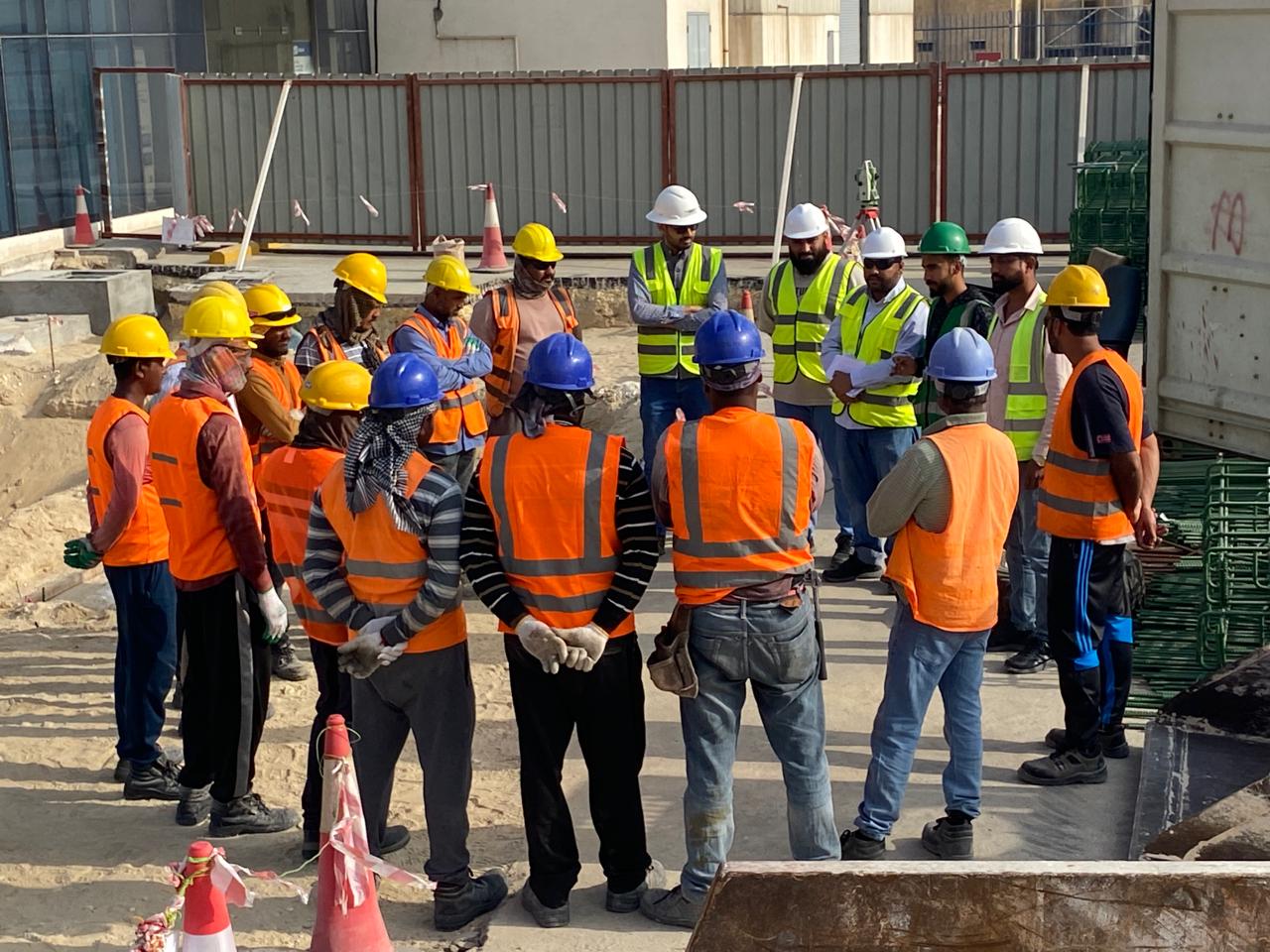
Construction coordination best practices tend to get written about as a list of habits — hold regular meetings, keep everyone informed, document decisions. All true, and all fairly useless without a real test of whether they hold up when something actually goes wrong. Coordination that only works when a project is going smoothly isn’t really coordination; it’s just calm weather.
Here’s what coordination between client, consultant, and contractor actually looked like under real pressure, on The Executive Lodges G+10, a mixed-use development in Pakistan I worked on as Civil Supervisor from 2018 to 2020 — a project disrupted by both COVID-19 labor restrictions and sudden basement flooding from the nearby Soan River.
For the full project background, see the Executive Lodges case study, or Project Engineer vs. Site Engineer for how this project shaped my own career path.
Under normal conditions, coordination between client, consultant, and contractor can run on routine — scheduled meetings, standard reports, predictable approvals. The real test came on Executive Lodges when both basements flooded overnight. In that moment, coordination stopped being a routine and became the only thing standing between a fast, controlled recovery and a much larger loss. Every one of the practices below either held up under that pressure or it didn’t, and the ones that held up are the ones worth explaining.
Good coordination starts with everyone understanding exactly whose decision something actually is. The client owns budget and scope decisions. The consultant owns technical approval and design compliance. The contractor owns execution and day-to-day site management. When the flood hit, this clarity mattered immediately — mobilizing emergency pumping operations was a contractor-side execution decision that didn’t need to wait on client or consultant sign-off, while the structural implications of the flooding absolutely did need consultant review before work resumed. Confusing these roles, even briefly, costs exactly the kind of time a crisis doesn’t allow for.
One of the easiest coordination habits to lose during a crisis is honest reporting — the temptation to soften bad news, or delay reporting it until there’s better news to pair it with. On Executive Lodges, reporting the flooding and its likely schedule impact immediately, rather than waiting to see how recovery went first, is what let the client and consultant make informed decisions early rather than reacting later to a surprise. Coordination built on reporting that’s only honest when things are going well isn’t coordination the client or consultant can actually rely on.
Best-practice coordination separates routine communication from urgent communication, so urgent items don’t get lost in a queue of routine updates. Weekly progress meetings handle the steady, expected flow of information — schedule status, upcoming milestones, standard approvals. A crisis needs a different, faster channel entirely: direct, immediate contact with whoever can actually make the relevant decision, rather than waiting for the next scheduled meeting to raise something that can’t wait.
Minutes of meetings often get treated as an administrative afterthought, but well-kept minutes are one of the most practical coordination tools available — a clear, agreed record of what was decided, by whom, and what happens next. During flood recovery specifically, having an accurate record of decisions made under pressure meant there was no ambiguity afterward about what had been agreed, which mattered once the immediate crisis had passed and normal reporting resumed.
The COVID-19 disruption tested a different kind of coordination — not a single dramatic event, but a sustained period where labor availability itself became unpredictable. Rigid coordination, built around assuming a fixed labor force would always be available, would have broken down quickly. What worked instead was coordination that stayed in close, frequent contact with the contractor’s labor situation day to day, adjusting expectations with the client and consultant in real time rather than holding everyone to a schedule built on assumptions that no longer applied.
A coordination plan is only as good as whether people actually use its escalation path when something needs it. It’s common for a project to have an escalation process on paper that nobody follows in practice, because raising an issue early can feel like admitting a problem before it’s fully understood. The better habit — and the one that mattered during both the flood and the pandemic disruption on this project — is escalating a concern as soon as it’s identified, even before every detail is confirmed, rather than waiting for full certainty and losing the time that early escalation would have bought.
By the end of Executive Lodges, the practical result of this coordination approach was no structural or material damage despite major flooding, continued project progress through the pandemic disruption, and clearer execution processes across trades than existed at the start. None of that came from any single practice — it came from roles staying clear, reporting staying honest, and escalation happening early enough to matter, consistently, across two very different kinds of disruption.
What are the most important construction coordination best practices?
Clear role separation between client, consultant, and contractor, honest reporting even when the news is bad, structured communication channels for routine versus urgent issues, well-kept minutes of meetings, and escalation paths that are actually used rather than just documented.
How does coordination change during a construction crisis?
Routine channels like weekly meetings become too slow for urgent decisions, so coordination needs a faster, more direct path to whoever can actually make the relevant call — combined with reporting that stays honest immediately, rather than waiting for a clearer picture.
Why are minutes of meetings considered a coordination tool rather than just documentation?
Because they create an agreed, unambiguous record of decisions in real time — which matters most exactly when memory of a fast-moving situation, like a crisis response, would otherwise become unreliable after the fact.
What’s the biggest coordination mistake between client, consultant, and contractor?
Blurred roles — when it’s unclear who actually owns a given decision, everyone either waits for someone else to act or multiple parties act independently, both of which cost time a project, especially one under pressure, doesn’t have.
Aown Muhammad is a Project Engineer based in Dammam, Saudi Arabia, registered with the Saudi Council of Engineers (SCE) and the Pakistan Engineering Council (PEC), with 7+ years of experience across residential, commercial, and industrial construction projects in Pakistan and Saudi Arabia. View full portfolio and projects →