The construction project lifecycle gets explained a lot in generic, textbook terms — planning, execution, closeout — without much sense of what actually happens at each stage from someone standing on site. Here’s that lifecycle walked through using a real project: The Executive Lodges G+10, a mixed-use development in Pakistan I worked on as Civil Supervisor from 2018 to 2020.
For more on how this project unfolded, see the full Executive Lodges case study, or Project Engineer vs. Site Engineer for how this project fits into my own career path.
Every project starts before a single trench is dug — confirming mobilization, labor arrangements, and the initial work plan. On Executive Lodges, mobilization had to happen fast and more than once: the first time at project start, and a second time under emergency conditions when basement flooding from the nearby Soan River required immediate remobilization for recovery work. Planning on paper is one thing; planning that can flex when the site changes overnight is what actually gets used.
This is the longest and most variable stage of the construction project lifecycle — where labor, materials, and coordination all have to move together. On this project, execution meant managing site labor and subcontractors through a period of COVID-19 disruption, when labor availability itself became unpredictable. The approach that worked wasn’t rigid adherence to the original schedule — it was flexible coordination with labor under those constraints, and a deliberate focus on keeping workflow moving even when perfect scheduling wasn’t possible.
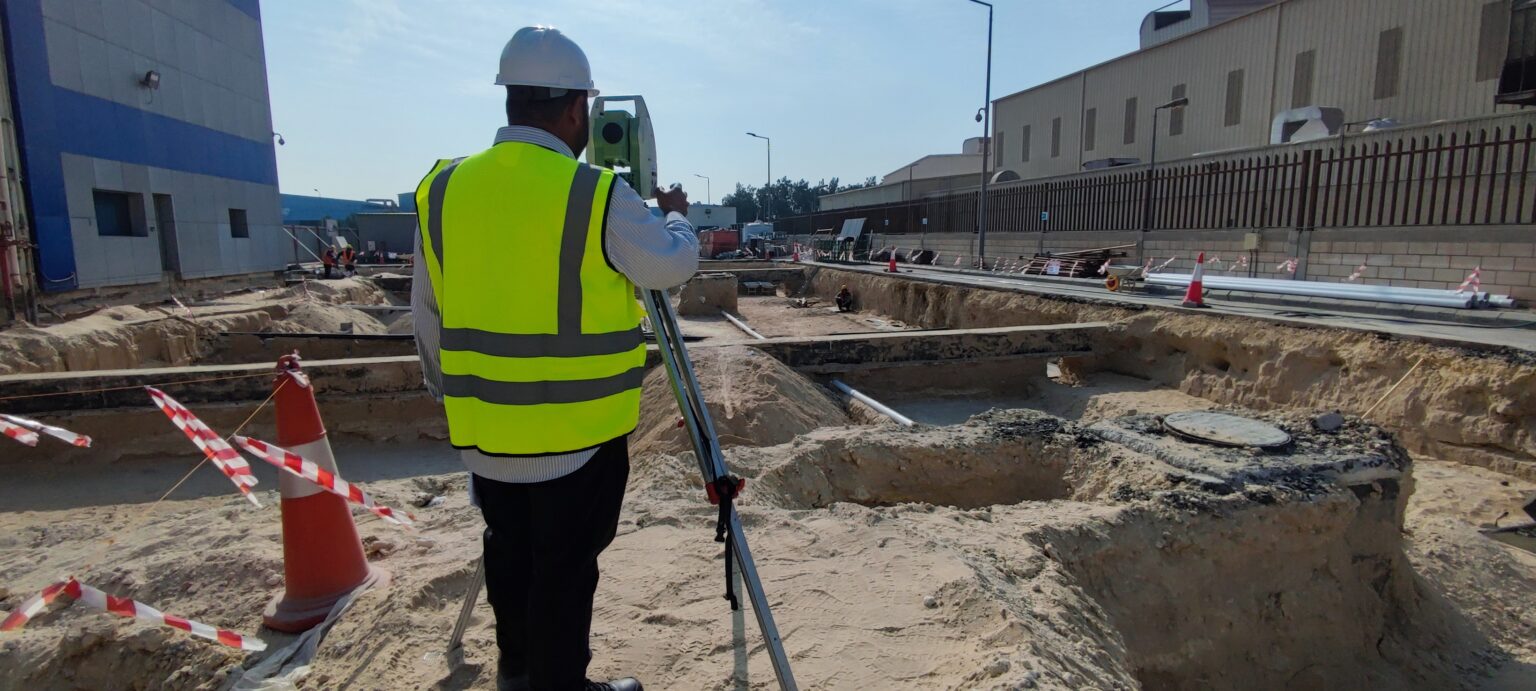
No project goes exactly to plan, and this stage of the lifecycle is really about how fast problems get controlled once they appear. On Executive Lodges, that meant leading a one-week emergency pumping operation after both basements flooded overnight — alongside the ongoing work of reinforcement inspections and layout execution that quality control always requires, flood or no flood.
Running alongside execution, not after it, is the steady work of documentation — in this case, supporting quantity estimation for steel and concrete using MS Excel, and keeping records accurate enough that decisions during the flood recovery could be made quickly, based on real data rather than guesswork.
The lifecycle closes with confirming the work matches what was approved, and handing it over. On Executive Lodges, closeout meant a project delivered with no structural or material damage despite the flooding, project continuity maintained through the pandemic disruption, and clearer execution processes across trades by the end than at the start.
Textbook versions of the construction project lifecycle assume each stage happens cleanly, in order. Real projects don’t work that way — Executive Lodges needed to re-run parts of Stage 1 (mobilization) in the middle of Stage 2 (execution) when the flood hit. Understanding the lifecycle matters less as a fixed order and more as a set of skills you can pull from at any point, in whatever order the project actually demands.
What are the main stages of a construction project lifecycle?
Broadly: planning and mobilization, execution and site coordination, quality control, documentation and reporting, and handover/closeout — though on real projects these stages often overlap or repeat, rather than running in a strict straight line.
Does the construction project lifecycle look different for industrial vs. residential projects?
The core stages stay the same, but the emphasis shifts — industrial projects typically carry heavier documentation and authority reporting requirements, while residential and mixed-use projects like Executive Lodges lean more on labor coordination and site-level problem-solving.
What’s the most unpredictable stage of the lifecycle in practice?
Execution, by a wide margin — planning can be revised on paper, but execution is where real-world disruptions like labor shortages or site flooding actually have to be managed in real time.
Aown Muhammad is a Project Engineer based in Dammam, Saudi Arabia, registered with the Saudi Council of Engineers (SCE) and the Pakistan Engineering Council (PEC), with 7+ years of experience across residential, commercial, and industrial construction projects in Pakistan and Saudi Arabia. View full portfolio and projects →