
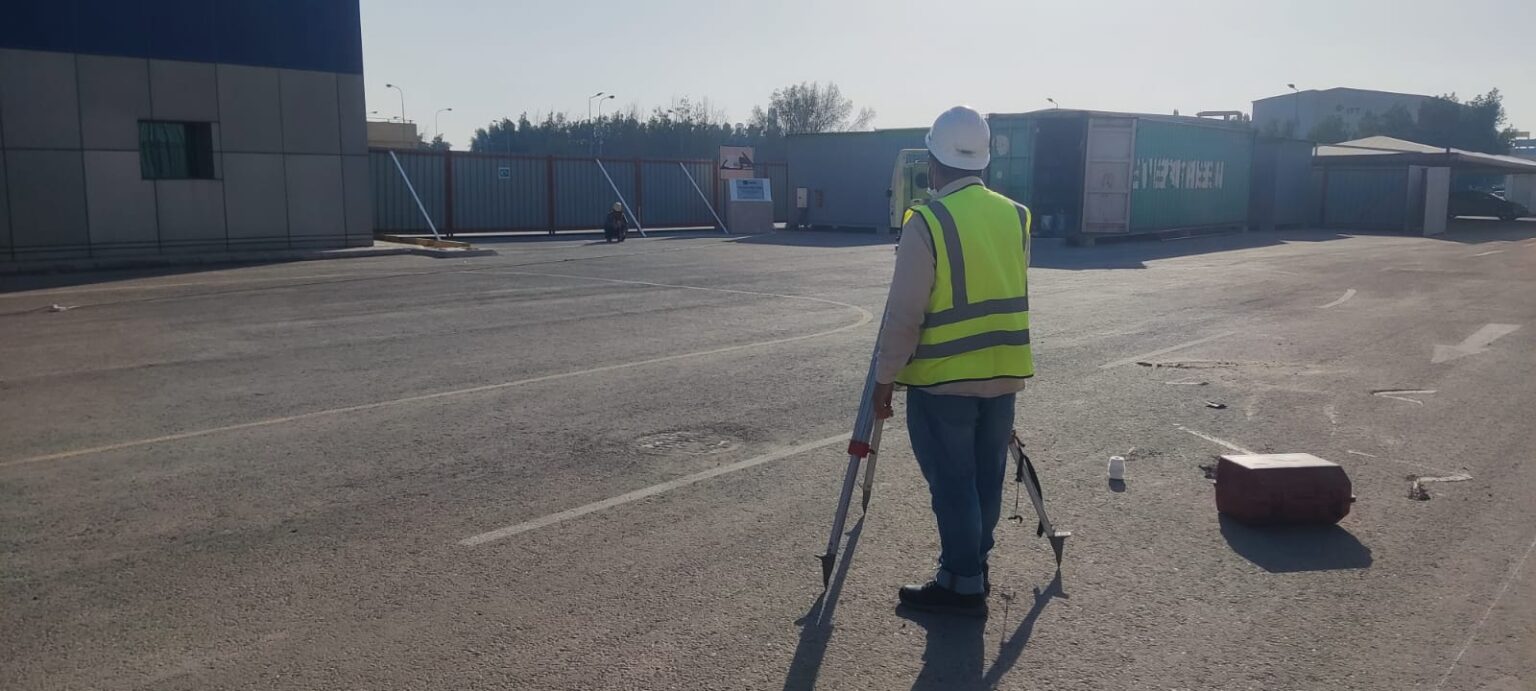
Project engineer vs site engineer is one of the most common questions I get from people starting out in construction — and it’s a fair one, because the two roles overlap enough on paper to look interchangeable. They aren’t. I’ve worked both, and the difference comes down to scope: one is about what happens on site, the other is about everything that has to come together around the site for the work to happen at all.
This post builds on What Does a Project Engineer Do in Saudi Arabia’s Construction Industry? and the Complete Roles and Responsibilities Checklist — read those for the full responsibility breakdown.
Site Engineer | Project Engineer | |
Primary focus | Day-to-day field supervision | Planning, coordination, documentation, and site support |
Scope | Ensures work on site matches approved drawings and specs | Coordinates across design, procurement, consultant, and client |
Documentation involvement | Site-level records (daily logs, inspections) | Full project documentation — RFIs, submittals, reports, MOMs |
Stakeholder contact | Mostly contractor and site team | Client, consultant, procurement, and site team |
Typical career stage | Often an earlier or field-focused role | Broader role, often following site-level experience |
Neither role is “senior” to the other by default — a lot depends on the company and project size. But in my own experience, the Project Engineer role builds directly on the ground-level judgment you develop as a Site Engineer or Supervisor first.
I didn’t start as a Project Engineer — the role only made sense to me once I’d actually spent time on site first. Here’s how that progression actually looked:
Civil Supervisor — Realtime Builders and Developers, Pakistan (2018–2020) My first role, working on the Executive Lodges G+10 project. This was pure field work — safety, workforce coordination, and making sure the crew’s daily output matched the plan. No procurement, no client-facing reporting — just execution on the ground.
Civil Site Engineer — Khurram Contracting Co., Pakistan (2020–2022) Moved into a Site Engineer role on Sagheer Avenue G+6, a commercial project. The scope widened — now I was directly responsible for checking work against drawings and specifications, not just managing the crew.
Project Engineer — Edify Studio, Pakistan (2022–2025) This is where the scope changed meaningfully. On the Residential Villas project, I was now handling subcontractor management, vendor comparison sheets, and material selection — coordination work that sits above the day-to-day site level.
Project Engineer — Arab Tech, Dammam, Saudi Arabia (2025–Present) Currently on the EBARA Pumps Expansion, an industrial project where the Project Engineer scope is at its widest — clash detection across multiple disciplines, long lead item tracking, and monthly reporting to MODON, alongside everything from the earlier roles.
Looking back, each step added a layer rather than replacing the last one. The site-level judgment from the Civil Supervisor and Site Engineer years is still what the Project Engineer role runs on — it’s just applied across a much wider set of responsibilities now.
Is a Project Engineer more senior than a Site Engineer? Not automatically — it depends on the company structure and project size. In many cases, though, the Project Engineer role does involve broader responsibility, and professionals often move from Site Engineer or Civil Supervisor roles into Project Engineer roles as they gain experience, as reflected in my own career path above.
Can someone become a Project Engineer without first working as a Site Engineer? It’s possible, especially with strong academic or internship experience, but field-level experience tends to make the coordination side of the Project Engineer role easier to do well — you’re making calls about site execution that are hard to judge accurately without having done it yourself.
Do Project Engineers still spend time on site? Yes — the role isn’t office-only. Reviewing work in progress, coordinating with subcontractors face-to-face, and catching issues early all require regular site presence, even though the role also carries planning and documentation responsibilities a Site Engineer typically wouldn’t handle.
Aown Muhammad is a Project Engineer based in Dammam, Saudi Arabia, registered with the Saudi Council of Engineers (SCE) and the Pakistan Engineering Council (PEC), with 7+ years of experience progressing from Civil Supervisor to Project Engineer across residential, commercial, and industrial construction projects in Pakistan and Saudi Arabia. View full portfolio and projects →